Simple, visual supports to help children understand waiting and transitions
Waiting can be extremely difficult for many autistic children and young people. Time can feel abstract, unpredictable, and anxiety-provoking — especially when a child doesn’t know how long they are waiting or what will happen next.
Our Waiting Visuals are designed to make waiting clearer, calmer, and more manageable by turning time into something children can see and understand.
This resource includes Wait Cards, a Wait Board, and a 5-4-3-2-1 Countdown, all of which can be used flexibly at home, in school, or in community settings.
What’s Included
This resource includes three simple but effective visual supports:
- Wait Cards
- Wait Board
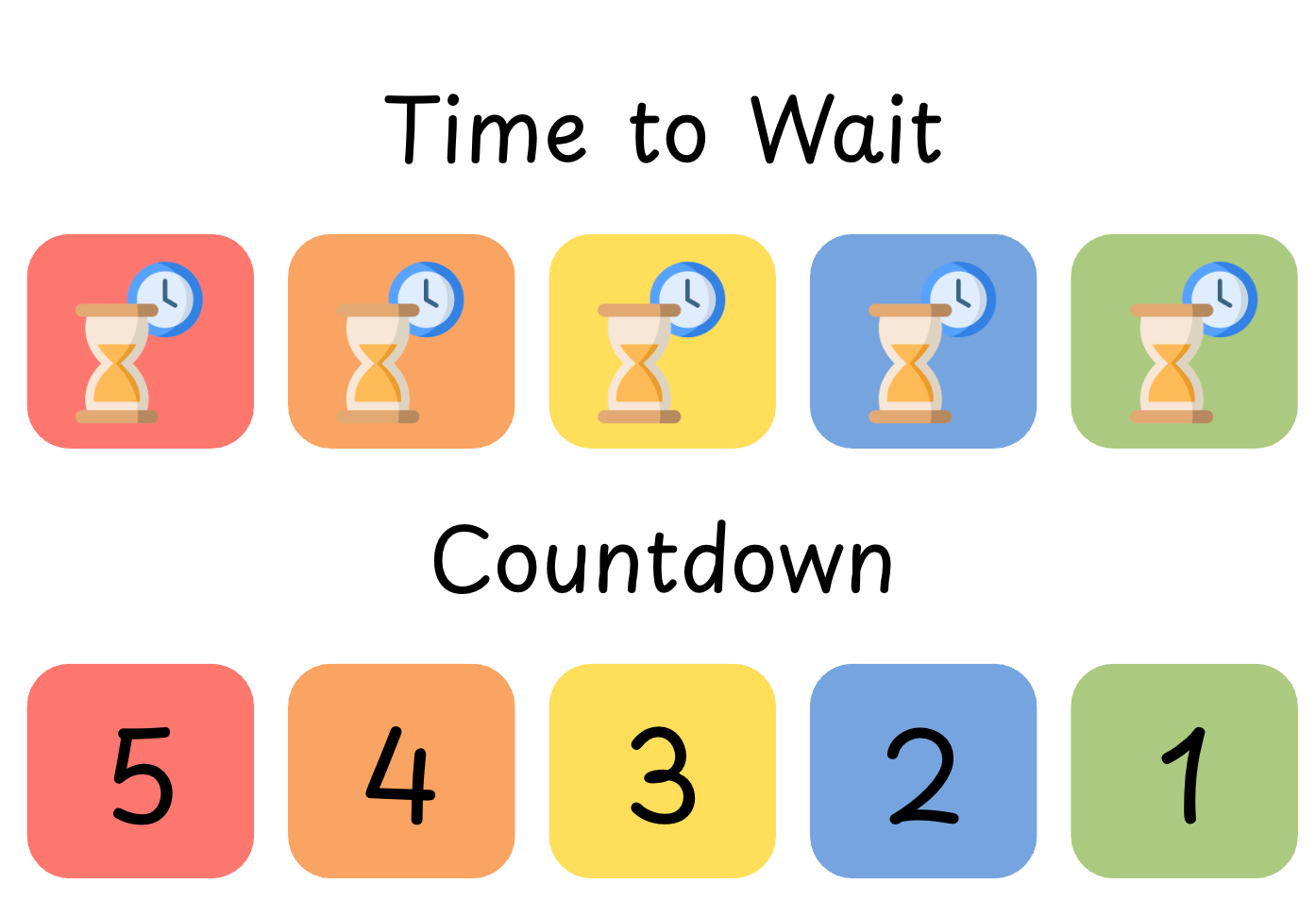
- 5-4-3-2-1 Countdown Visual
Each tool supports waiting in a slightly different way, and they can be used alone or together depending on the child’s needs.
Wait Cards
What they are:
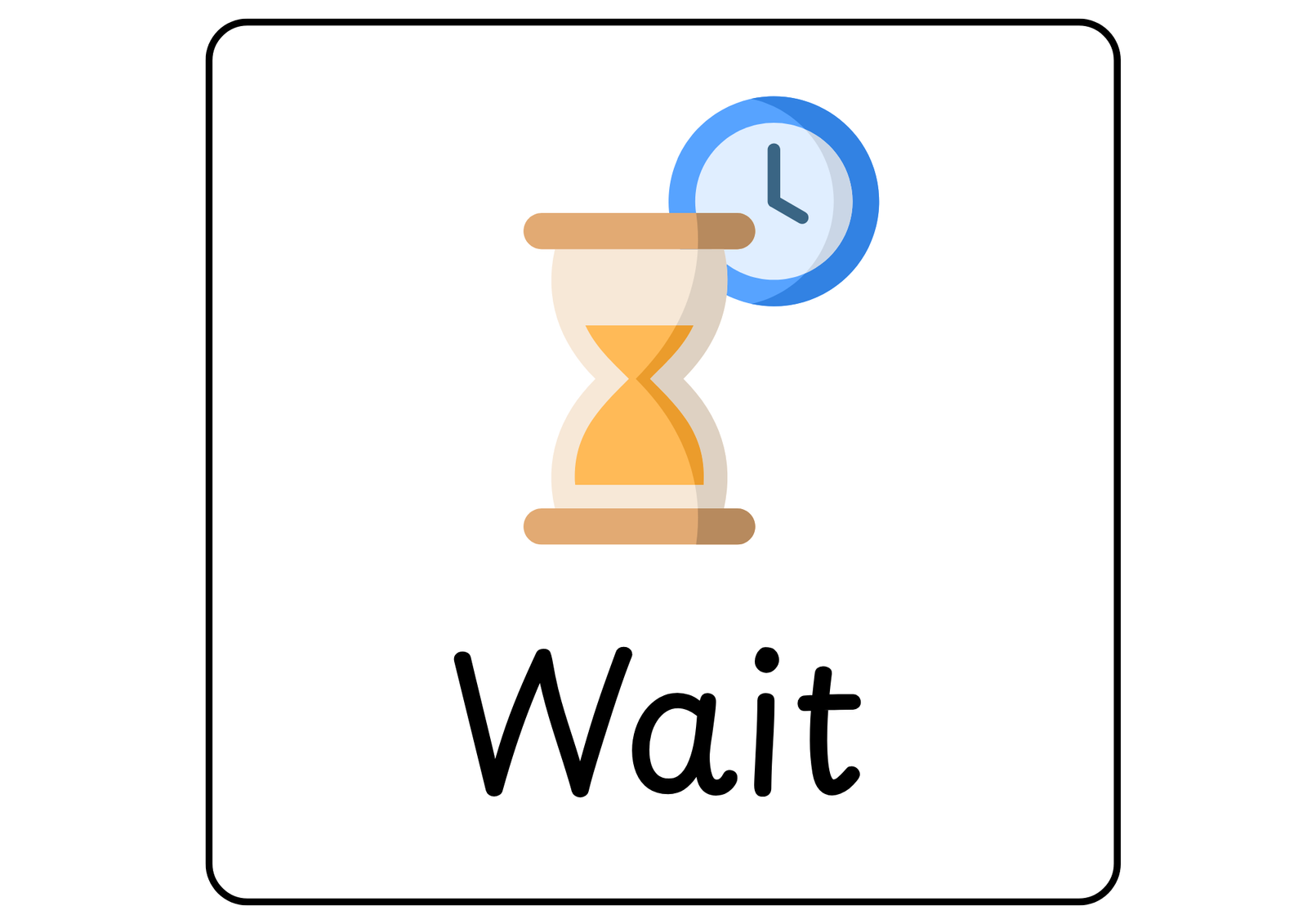
Clear, simple cards with the word WAIT that can be shown to a child to signal that something is not happening yet.
How to use them:
- Show the card while calmly saying “Wait”
- Pair it with what will happen next (e.g. “Wait… then snack”)
- Use consistently so the child learns what the card means
- Keep language short and clear
Wait cards work best when they are predictable and paired with reassurance, not used as a demand.
Wait Board
What it is:
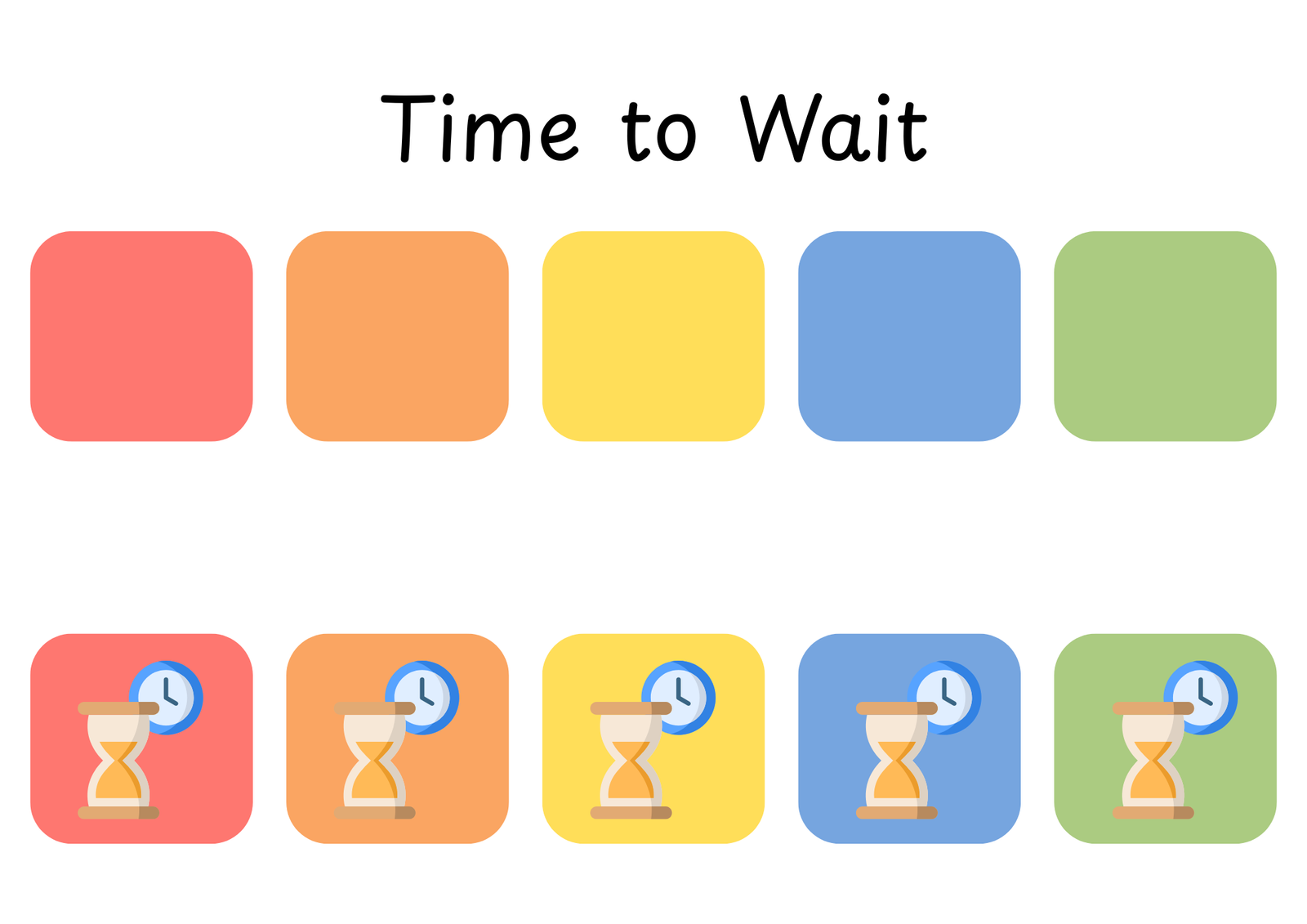
A visual board designed to show that waiting has a clear end point. Often used with removable pieces, symbols, or markers to show time passing.
How to use it:
- Start with very short waits
- Place all pieces on the board at the start
- Remove one piece at a time as waiting progresses
- When all pieces are gone, the waiting is finished
You can say things like:
“Wait… one gone.”
“Nearly finished waiting.”
This helps children see waiting getting shorter, which can significantly reduce anxiety.
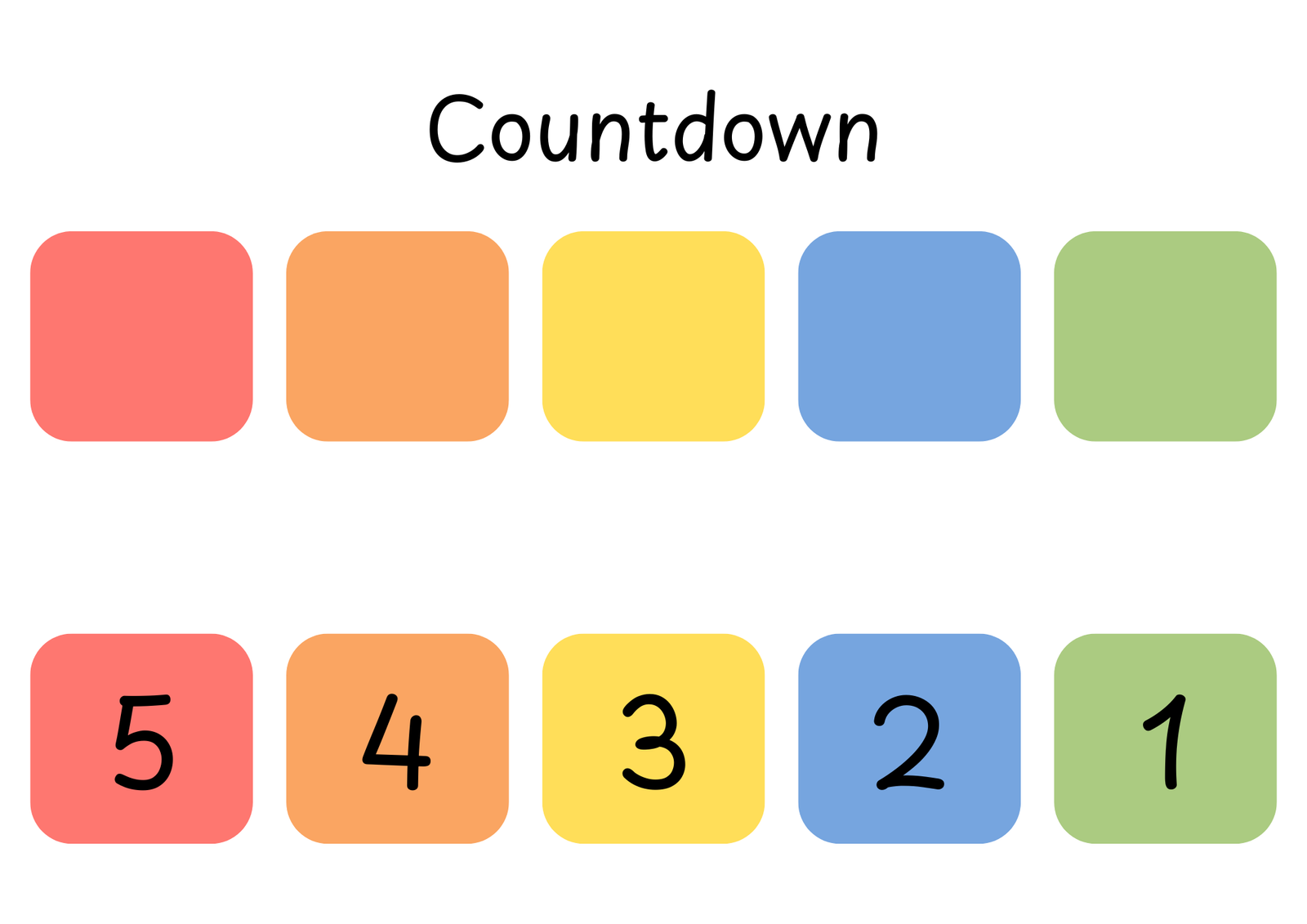
5-4-3-2-1 Countdown Visual
What it is:
A structured visual countdown that shows an activity coming to an end in clear, manageable steps.
How to use it:
- Introduce the countdown before the activity ends
- Remove or point to one number at a time
- Pair each step with simple language (e.g. “5… nearly finished”)
- When you reach 1, calmly move to the next activity
This countdown works particularly well for:
- Ending preferred activities
- Preparing for transitions
- Reducing sudden stops
It gives children time to prepare emotionally, rather than being surprised by change.
Tips for Success
- Keep language simple and consistent
- Always show what’s next, not just “finished”
- Start with short waits and build gradually
- Stay calm and predictable
- Praise effort, not just success
Waiting visuals are about support, not control — they help children feel safe, informed, and able to cope with change.
Who These Visuals Are For
These visuals are helpful for:
- Autistic children and young people
- Children who struggle with transitions or waiting
- Non-speaking or minimally speaking children
- Home, school, and support settings
They can also benefit any child who finds waiting frustrating or overwhelming.