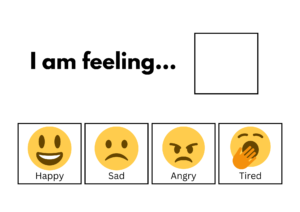
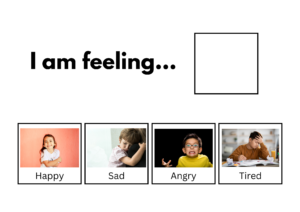
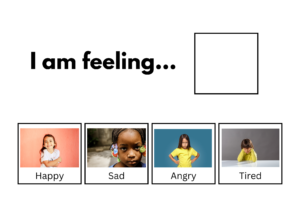
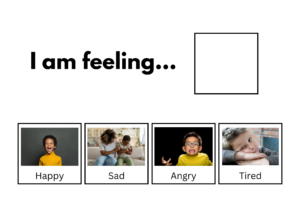
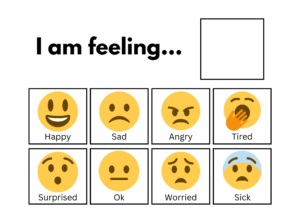
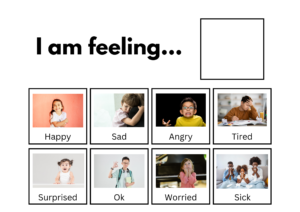
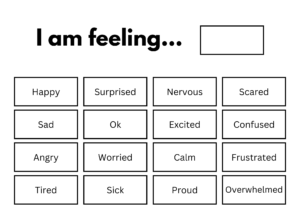
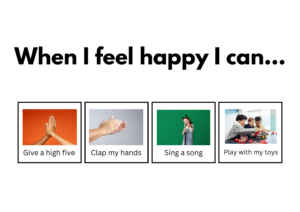
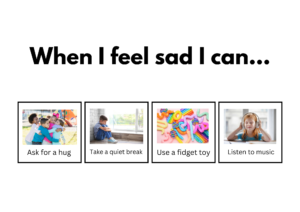
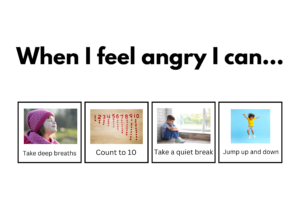
Clear, visual feelings boards to help children recognise, understand, and communicate emotions.
Our Feelings Boards are a free, practical resource designed to support children and young people to identify what they are feeling and communicate it in a simple, accessible way.
For many neurodivergent children, emotions can feel big, confusing, or hard to name — especially during stress, change, or sensory overload. Feelings boards offer a gentle starting point for emotional understanding, communication, and support.
They can be used at home, in schools, and in support settings.
What’s Included
This resource includes a variety of feelings boards designed to suit different ages, preferences, and communication styles, including:
- Emoji-based feelings boards for clear, simple visual recognition
- Photo-based feelings boards using images of children to support real-life emotional understanding
- Word-based feelings boards for children who prefer or are ready for written language
To support different levels of emotional awareness and avoid overwhelm, the boards are available with:
- 4 feelings
- 8 feelings
- 16 feelings
This allows you to start small and gradually introduce more emotional vocabulary as confidence and understanding grow.
Who Are They For?
Feelings boards can support:
- Autistic children and young people
- Children with speech, language and communication needs
- Non-speaking or minimally speaking children
- Children who struggle to identify or describe emotions (alexithymia)
- Schools and families supporting emotional literacy and regulation
They can also be helpful for any child who finds it easier to communicate visually, particularly in moments of stress.
Why We Created Them
Children often communicate emotions through behaviour — especially when they don’t yet have the words (or the access to words) to explain what’s happening inside.
Without the right support, children may be misunderstood, feel overwhelmed, or struggle to get their needs met. We created these Feelings Boards to give children a simple, respectful way to express their emotions and help adults respond with understanding rather than assumptions.
Naming feelings is not about forcing children to talk — it’s about offering a supportive tool that makes emotions feel safer, more manageable, and easier to share.
How to Use Feelings Boards
There are lots of flexible ways to use this resource:
Use it during check-ins (morning, after school, before bed)
Offer it as a choice: “Can you show me how you feel?”
Use it during tricky moments to reduce demand and support communication
Pair it with supportive follow-ups like:
“What do you need?”
“Do you want space or a hug?”
“Should we go somewhere quiet?”
Use it alongside a calm corner, sensory breaks, or a Now/Next board
The goal is not perfect emotional labelling — it’s connection, understanding, and support.