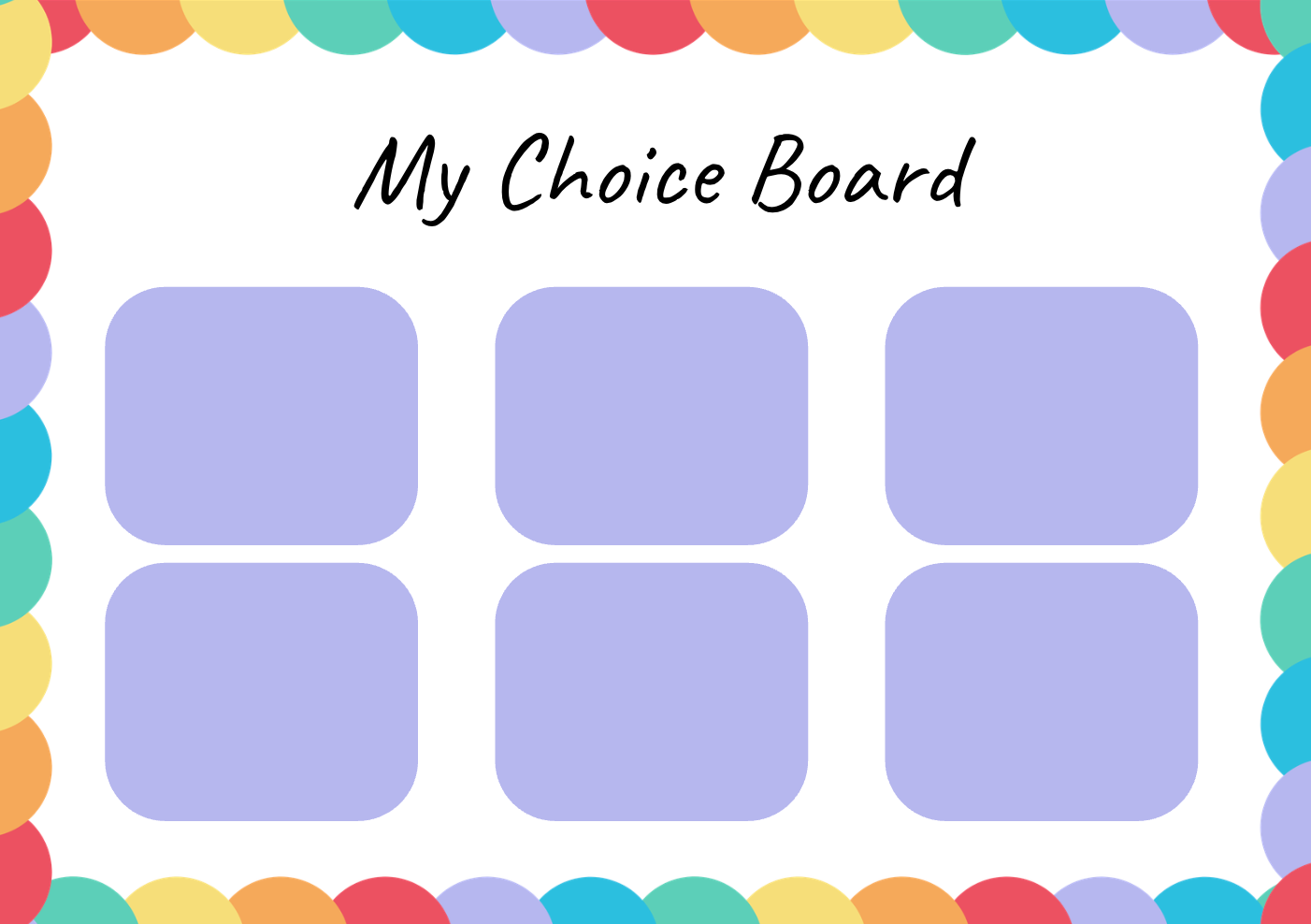
Our Choice Board resource is a free, practical visual support designed to make communication easier and everyday decision-making less stressful. Choice boards can support children to express what they want, reduce frustration, and increase independence — especially for children who find spoken communication difficult or who feel overwhelmed by too many options.
What’s Included
This resource pack includes:
- A My Choice Board template with 6 blank spaces for you to add the options that matter most to your child
- A set of ready-made choice cards covering common everyday wants and activities, including:
- Screen and play options (e.g. TV, iPad, toys, Lego, dolls, trains)
- Outings and movement (e.g. outside, walk, bike, swing, slide)
- Needs and wellbeing (e.g. food, drink, fruit, treat, toilet, hug, quiet time)
- Creative and calm activities (e.g. colouring, story, drawing, music, painting, play dough, puzzle)
Who Are Choice Boards For?
Choice boards are helpful for:
- Autistic children and young people
- Non-speaking or minimally speaking children
- Children who lose speech when stressed or overwhelmed
- Children who benefit from visual structure and clear options
- Home, school, and support settings that want to build independence
They’re also great for children who get stuck in “I don’t know” moments — giving them a clear starting point.
Why We Created This Resource
Many children know what they want or need, but can’t easily communicate it in the moment — especially when tired, anxious, hungry, or overwhelmed. When children can’t express choices, it can lead to frustration for everyone.
We created this Choice Board resource to make communication simpler, calmer, and more empowering. Offering meaningful choices helps children feel more in control, reduces uncertainty, and supports positive routines — without pressure or demands.
How to Use the Choice Board
Start with 2–4 choices until your child is confident, then build up
Offer choices at predictable times (after school, before bed, during transitions)
Keep choices realistic and available (to reduce frustration)
Use it to support routines (e.g. “First dinner, then choose”)
Let children point, hand you a card, or look towards a choice — all communication counts
You can also personalise the board by adding your own photos, symbols, or extra cards.