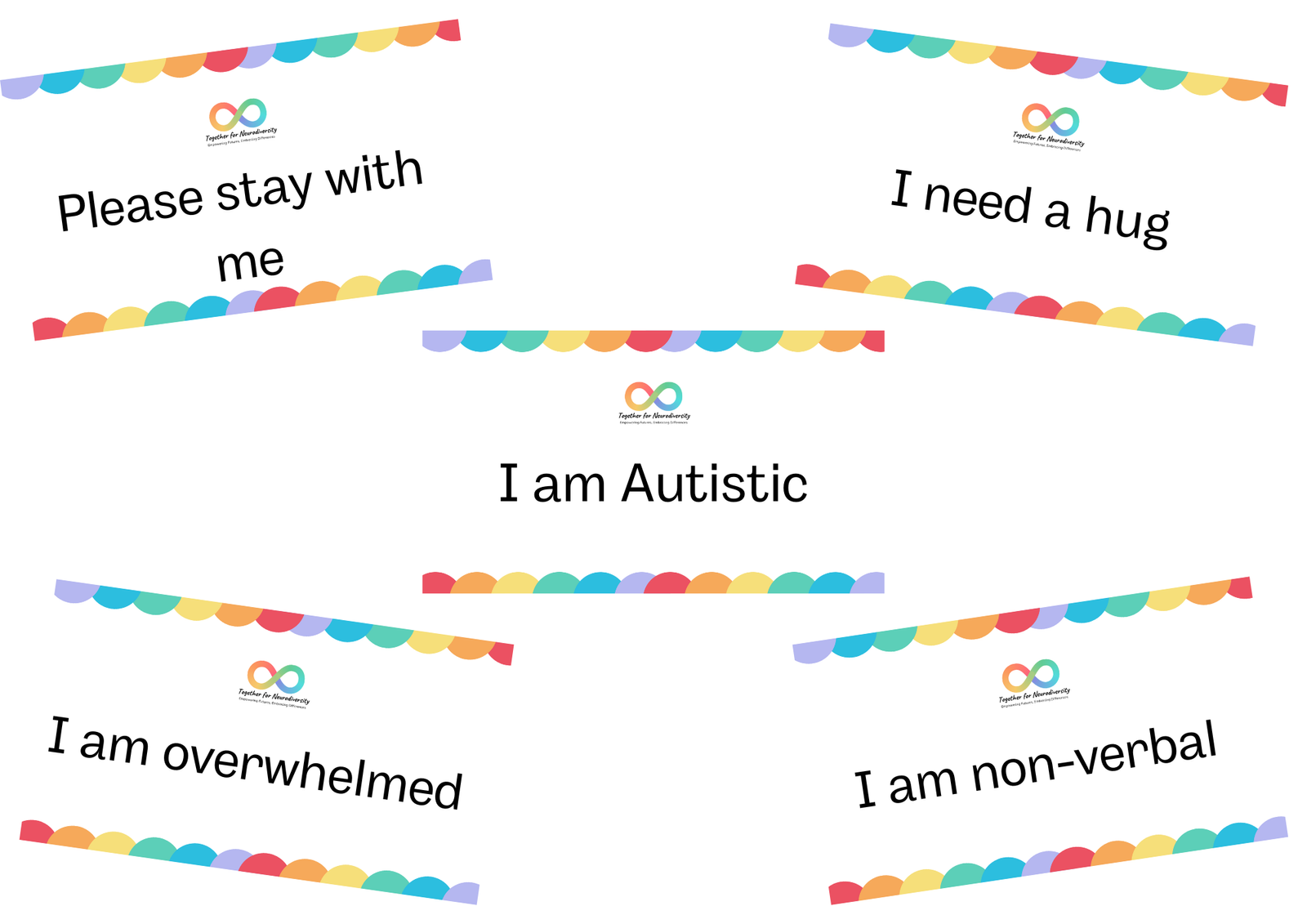
Simple, visual communication cards to support understanding, expression, and everyday communication.
Our Communication Cards are a free, practical resource designed to help children and young people communicate their needs, feelings, boundaries, and sensory experiences — especially in moments when speech is difficult or not available.
These cards support self-advocacy, reduce frustration, and help adults respond in a calmer, more supportive way. They can be used at home, in school, in the community, or anywhere a child needs an easier way to be understood.
They are designed to be simple, respectful, and easy to use — with a focus on what the individual is experiencing and what support they need.
Who Are They For?
Communication cards can support:
- Autistic individuals
- Non-speaking and minimally speaking individuals
- Individuals who lose speech under stress, anxiety, or overload
- Individuals with speech, language, and communication needs
- Schools, families, and professionals supporting communication
They can also be helpful for children who are verbal but find it hard to communicate in certain situations (such as transitions, busy environments, or heightened emotions).
Why We Created Them
When a child can’t easily communicate what they need, adults may misread distress as “behaviour”, and the child may feel unheard, unsafe, or overwhelmed.
We created these Communication Cards to provide a simple bridge between a child’s internal experience and the support they deserve. The aim is to make it easier for children and young people to express themselves, and easier for adults to respond with understanding, patience, and practical help.
Communication is a human right — and every child deserves to be listened to, in whatever way works best for them.
How to Use the Cards
You can use these cards in lots of flexible ways:
Print and keep them on a keyring, lanyard, or in a small pouch
Use a few core cards daily, and add more over time
Keep sets in key places (home, school bag, car, sensory space)
Model using the cards yourself (e.g. “Let’s find I need a break”)
Use them before, during, or after challenging moments to support regulation
There’s no one correct way to use them — the best approach is what works for the child.