Autism is often misunderstood as something simple, like being 'a little bit autistic' or 'very autistic'. However, autism is much more complex than that, and it's important to look beyond these common misconceptions to truly understand what it means.
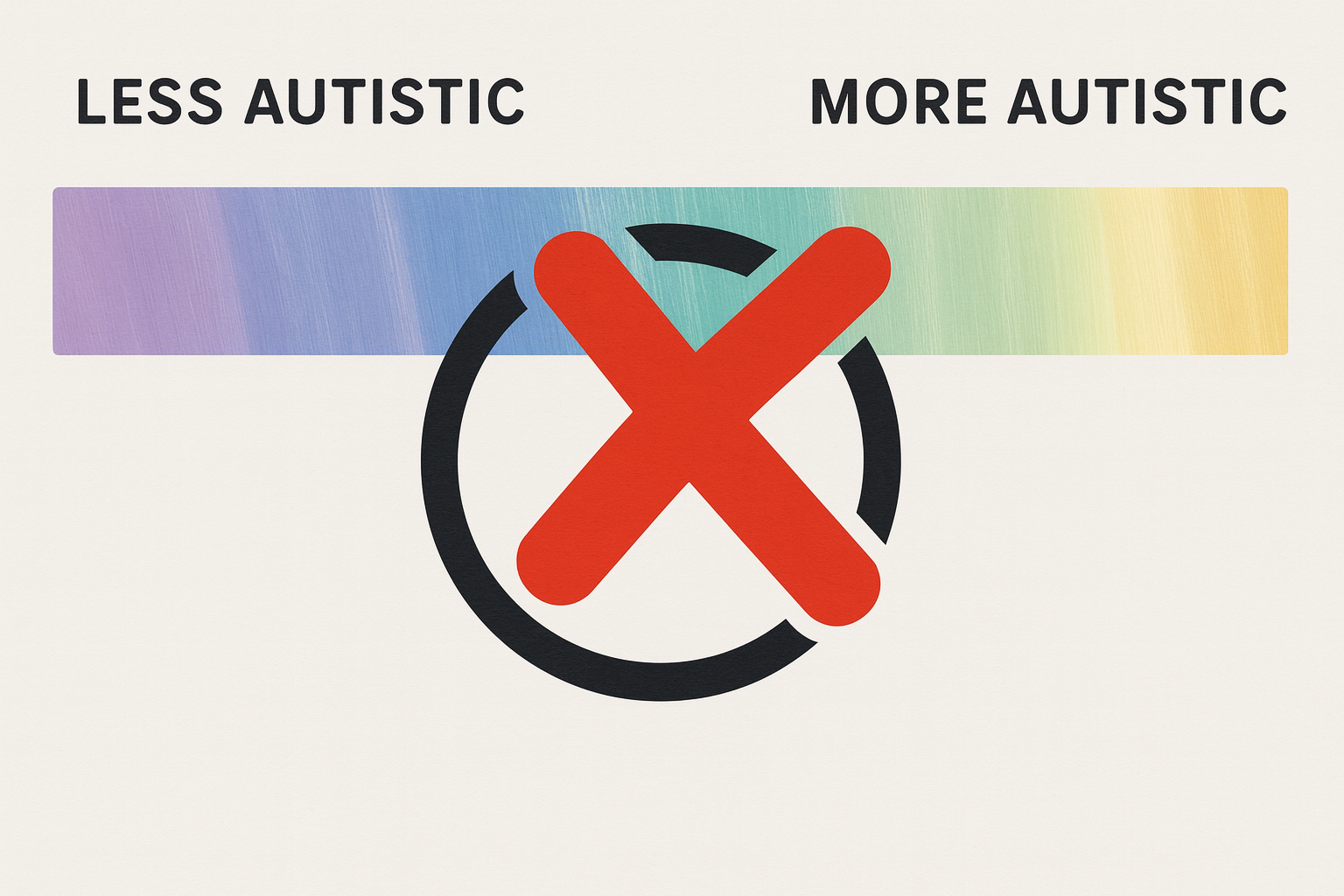
Autism isn't a straightforward scale. A person is either autistic or not autistic; there's no such thing as being 'a little bit autistic'. This makes statements like 'we're all on the spectrum somewhere' or 'everyone is a little bit autistic' false. It is true however that some traits linked to autism can also be seen in other conditions and are a part of normal human behaviour.
Contrary to popular belief, the autistic spectrum does not look like this:
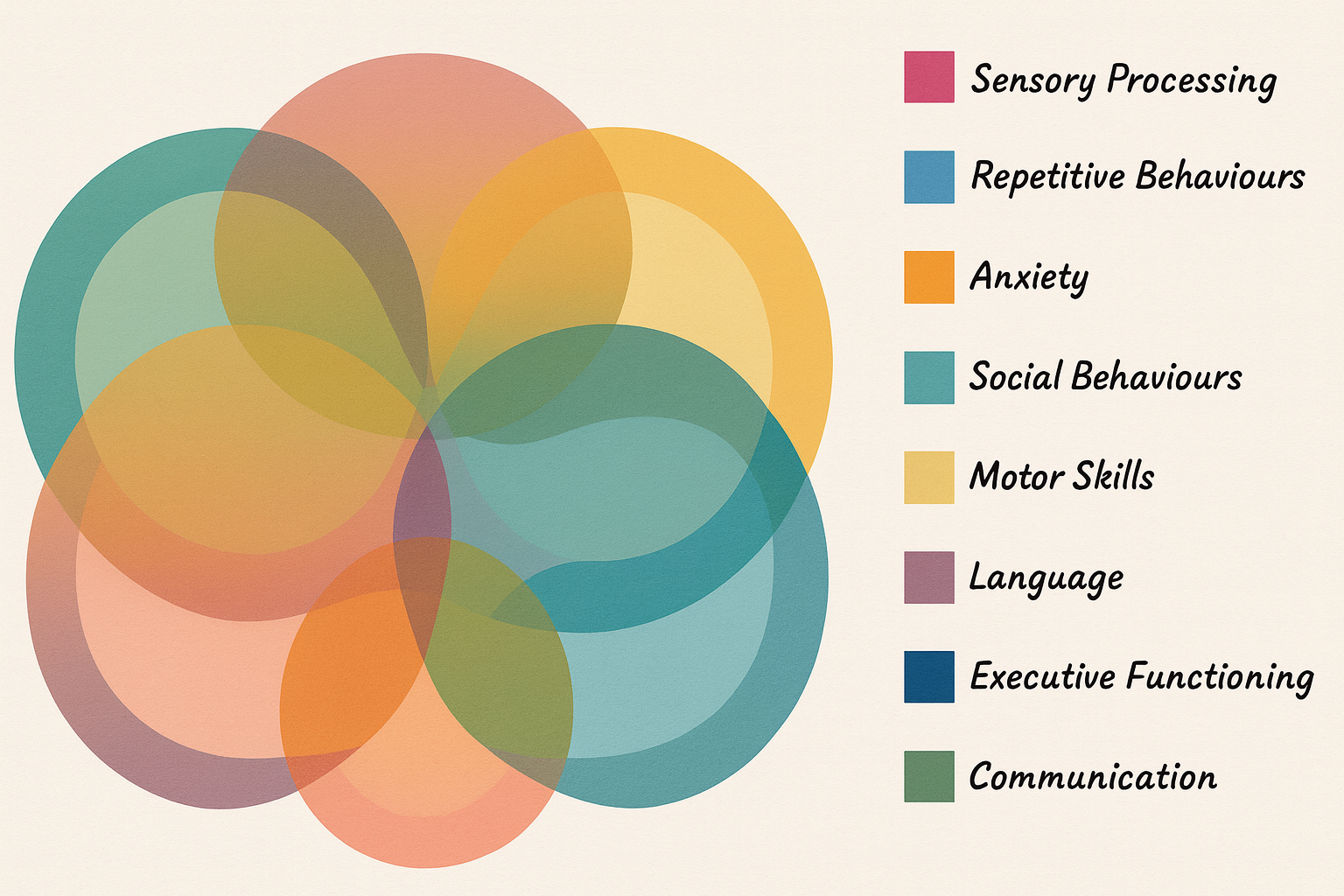
Instead of thinking about autism as a straight line, it's more helpful to imagine it as an altogether messier multi-dimensional chart, or Venn diagram. Each circle on this chart represents a different area, such as social skills, communication, sensory experiences, and how a person manages daily tasks. The larger a circle, the stronger that trait is in the person and the more overlap there is with another circle, the more the two traits or characteristics will interact with each other.
The autistic spectrum looks more like this:
Looking at autism in this way helps us better understand and support autistic individuals. It reminds us that autism isn't one-size-fits-all, and each person's experience is unique. Recognising and valuing these differences is the first step towards creating a more neuro-affirming and supportive environment for everyone.