
Understanding meltdowns and supporting your child with calm, compassion, and confidence
Meltdowns can be one of the most challenging and emotional parts of parenting an autistic child. They can feel intense, exhausting, and overwhelming — especially when they’re misunderstood by others.
A Parent’s Guide to Meltdowns is a supportive resource designed to help parents and carers understand what meltdowns really are, why they happen, and how to respond in ways that keep children safe, supported, and understood.
What Is a Meltdown?
This guide explains that a meltdown is not the same as a tantrum. A tantrum is often about wanting something or testing boundaries, whereas a meltdown happens when a child’s brain and body become overloaded and they lose the ability to cope.
Meltdowns are not “bad behaviour”. They are a response to overwhelm — a child communicating distress when they no longer have the capacity to manage what they’re experiencing.
Why Do Meltdowns Happen?
The guide explores common reasons meltdowns may occur, including:
Sensory overload (noise, lights, crowds, textures, smells)
Emotional overload (worry, frustration, big feelings)
Unexpected changes or lack of predictability
Communication difficulties
Physical needs such as hunger, tiredness, or illness
It helps parents understand how stress can build up over time until a child reaches their limit.
Early Warning Signs
Meltdowns often come with early signs. Learning to recognise these can help parents step in with support before things escalate. These signs may include:
Increased fidgeting or repetitive movements
Covering ears or withdrawing
Becoming unusually quiet or clingy
Visible tension or rapid breathing
Heightened emotional reactions
Every child has their own unique warning signs, and noticing patterns can be incredibly helpful.
What to Do During a Meltdown
The guide provides clear, practical advice for supporting a child during a meltdown, including:
Staying calm and regulated yourself
Removing demands and reducing sensory input
Using short, reassuring language
Respecting your child’s need for space or comfort
Keeping your child safe while allowing the meltdown to pass
It also explains that meltdowns cannot simply be “stopped” and need time to run their course.
What Not to Do During a Meltdown
The guide gently explains why certain responses often make meltdowns worse, including:
Punishment
Shouting or showing anger
Trying to reason or explain
Forcing eye contact or physical contact
Taking the behaviour personally
Instead, it encourages calm, supportive responses that prioritise safety and reassurance.
After a Meltdown
Support continues after the meltdown has ended. This section explains how to help your child recover by:
Allowing time and space to rest
Offering reassurance and comfort
Talking gently about what helped (when appropriate)
Noting triggers and helpful strategies for the future
This approach helps reduce shame and supports emotional recovery.
Reducing and Preventing Meltdowns
While not all meltdowns can be prevented, this guide shares practical strategies that may reduce how often they happen, such as:
Keeping routines predictable
Using visual supports
Preparing for changes and transitions
Supporting sensory needs
Meeting basic needs regularly
Building in downtime and rest
The focus is on prevention through understanding, not control.
Safe Spaces and Meltdown Plans
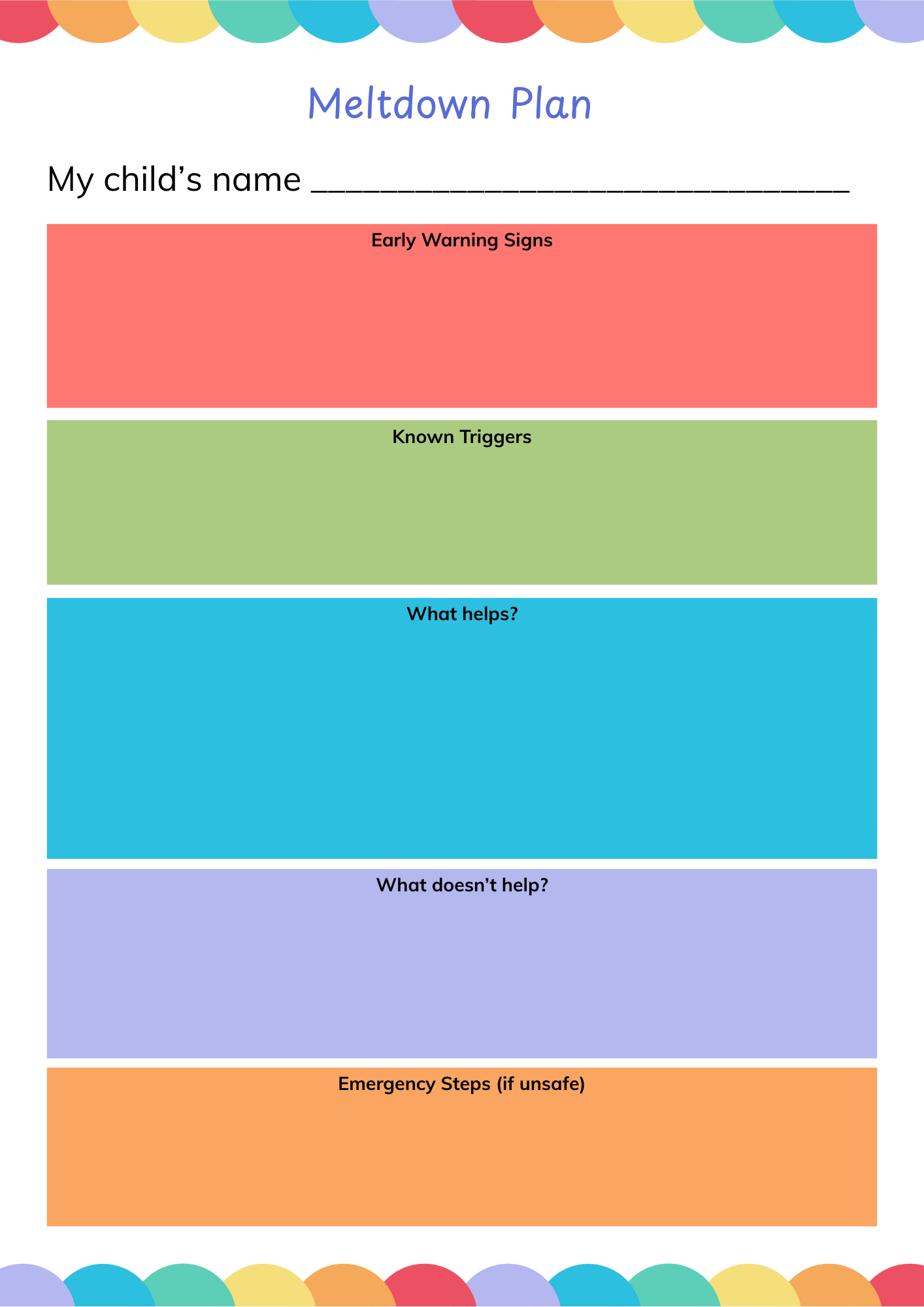
The guide also includes guidance on:
Creating a safe space where a child can calm and regulate
Developing a meltdown plan that explains what helps before, during, and after a meltdown
Sharing this plan with family members, school staff, and carers to ensure consistent support
These tools help children feel safer and adults feel more confident.
Who This Guide Is For
This resource is ideal for:
Parents and carers of autistic children
Families supporting children who experience intense overwhelm
Anyone wanting a compassionate, practical understanding of meltdowns